About Me
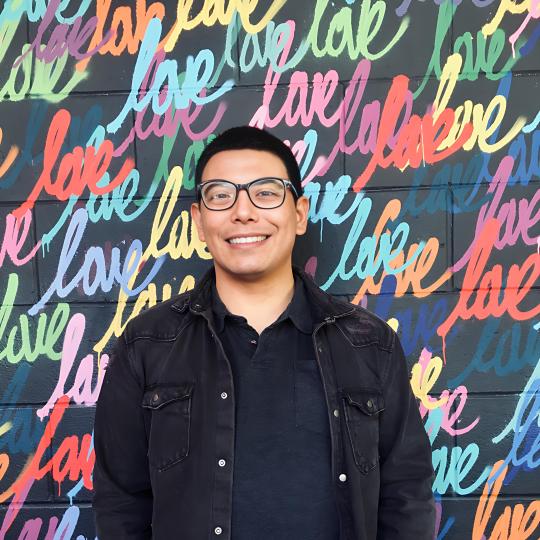
Carlos D. Alas is a theoretical and computational physicist working in data science, with a Ph.D. in Physics and M.S. in Computer Science. He earned his doctorate from the University of Southern California, where his work under Dr. C. A. Haselwandter uncovered the physical principles governing membrane mechanics, membrane domain formation, and cellular signal transduction. His earlier studies took him through California Polytechnic State University, San Luis Obispo and Antelope Valley College. Dr. Alas specializes in statistical mechanics, applying stochastic models across scales — from cellular signal transduction at the nanoscale to driving behavior at the vehicle scale to trends in financial markets. His work draws on time-series analysis, hidden Markov models, deep learning, and tree-based methods, with a particular focus on anomaly and regime change detection. In the insurance industry, he translates R&D concepts into scalable solutions, drawing on statistical physics, mathematics, and market research to guide business partners in product strategy. Throughout his academic career, Dr. Alas earned numerous honors, among them a USC Dornsife Fellowship, multiple research scholarships, and a physics subject area award. When he’s not modeling the world’s hidden patterns, Dr. Alas can be found exploring the diverse landscapes of greater Los Angeles — from the vibrant coastal regions to the tranquility of the Angeles National Forest. He enjoys culinary exploration, the occasional low-stakes game of billiards, and stays active through swimming.
How can telematics revolutionize the way drivers are priced by insurers — and give drivers a say in how safe they really are?
Self-assembly of emerin nanodomains
Could the morphogenesis of Emery-Dreifuss muscular dystrophy be traced back to a Turing instability perturbed by mutations in emerin?
Thermosensing through membrane mechanics
Can the alterations in membrane mechanical properties due to changing temperature be utilized by cells to sense temperature?
Protein-induced bilayer deformations
How can protein shape impact protein-membrane interactions and the stabilization of protein conformational states?
Swimming of microorganisms in quasi-2D membranes
How do microorganisms propagate in quasi-2D membranes?
Bacteria in porous media: Kinetic Monte Carlo model
Can a simple kinetic Monte Carlo model predict bacterial diffusion in porous media and reveal the essential physics of transport?
Playlist: Learn about Thermosensing through membrane mechanics & the Dependence of protein-induced bilayer deformations on protein shape (APS March Meeting talks – Las Vegas 2023 & Chicago 2022)